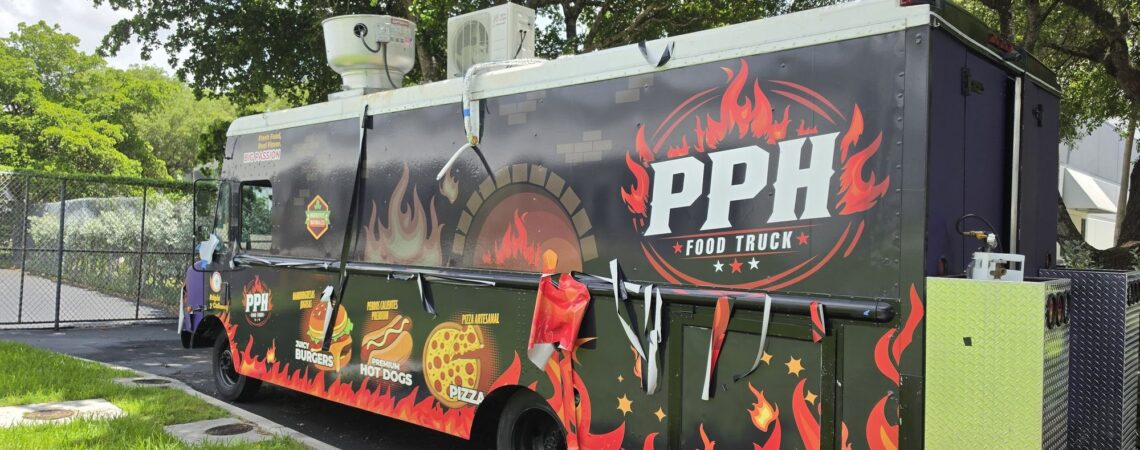
Short answer: a good food truck wrap does three jobs at once. It tells people from across the street what you sell, it shows your menu at walking distance, and it works around everything bolted to the truck: the vent hood, the AC unit, the service window and the storage boxes. This is how we handled it on the PPH Food Truck project in Miami-Dade.
After 35 years in the print trade, the part of a food truck wrap that decides whether it looks professional is rarely the artwork. It is how the graphics are planned around the truck itself.
The project: PPH Food Truck
PPH sells burgers, premium hot dogs (perros calientes) and artisan pizza, and the wrap says so in English and Spanish. The design is a black base with red and orange flames, a brick wood-fired oven graphic, a large PPH logo with flames on the side, and menu panels along the service area. The tagline on the truck reads “Fresh Food, Real Flavor. Big Passion.”
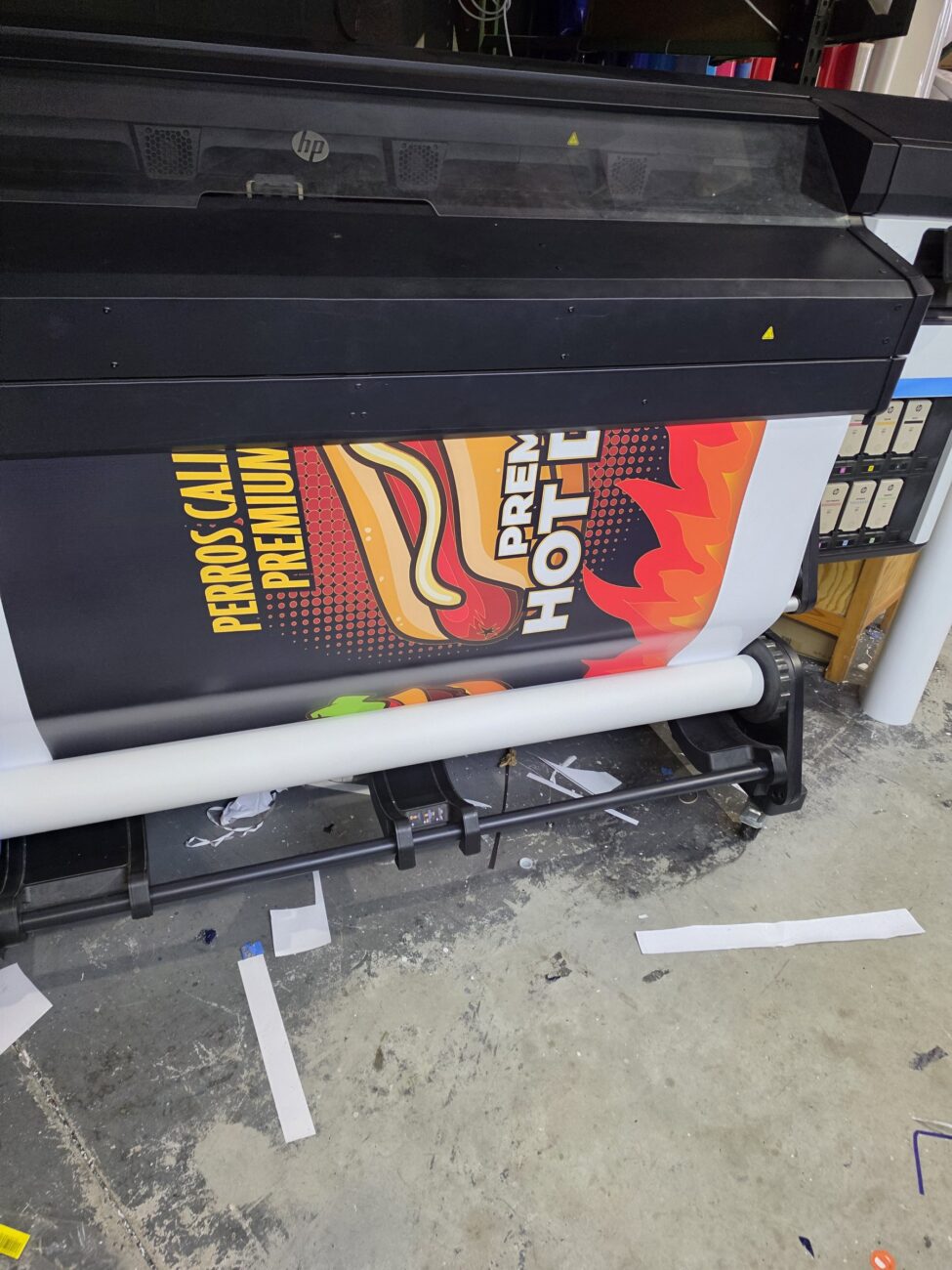
Step 1: Print the panels
The wrap starts as large printed panels. We print them on a wide-format printer at our Doral shop, so we control color and panel layout from the first pass. A black base with bright flames needs careful color work, because dark areas show every banding or alignment mistake.
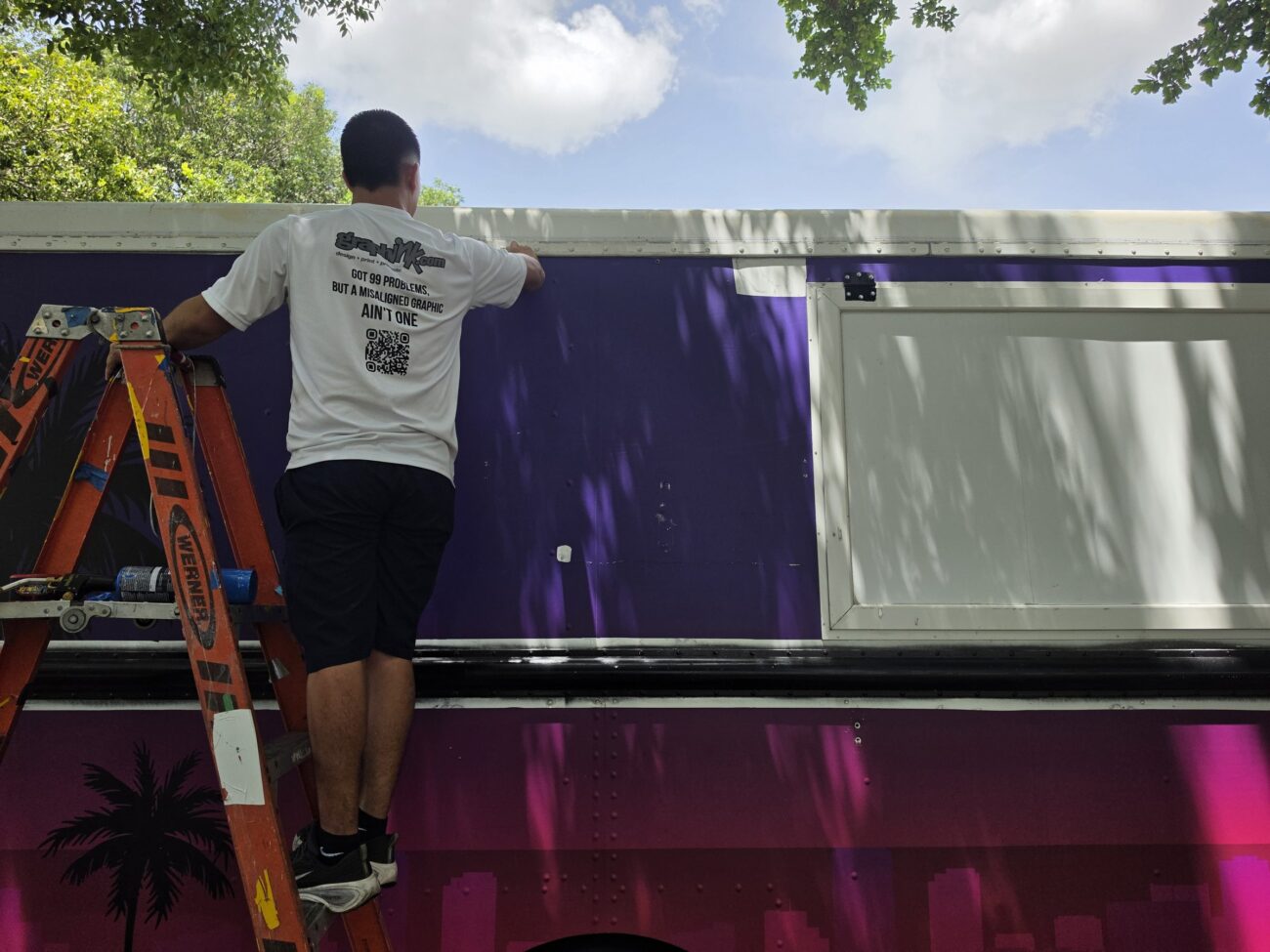
Step 2: Plan around the truck
A food truck is not a flat box. Before installing, look at what the graphics have to work around:
- Rivets and panel seams. Box bodies have rows of rivets and seams that the film has to follow. Good installers work it in sections so the pattern lines up across them.
- The service window and doors. Graphics are cut and trimmed around the opening so the window still opens cleanly.
- Roof equipment. The vent hood and AC unit on the roof limit how high the graphics can go.
- Storage boxes and fixtures. Chrome boxes, gas fittings and trim stay uncovered, and the design continues around them.
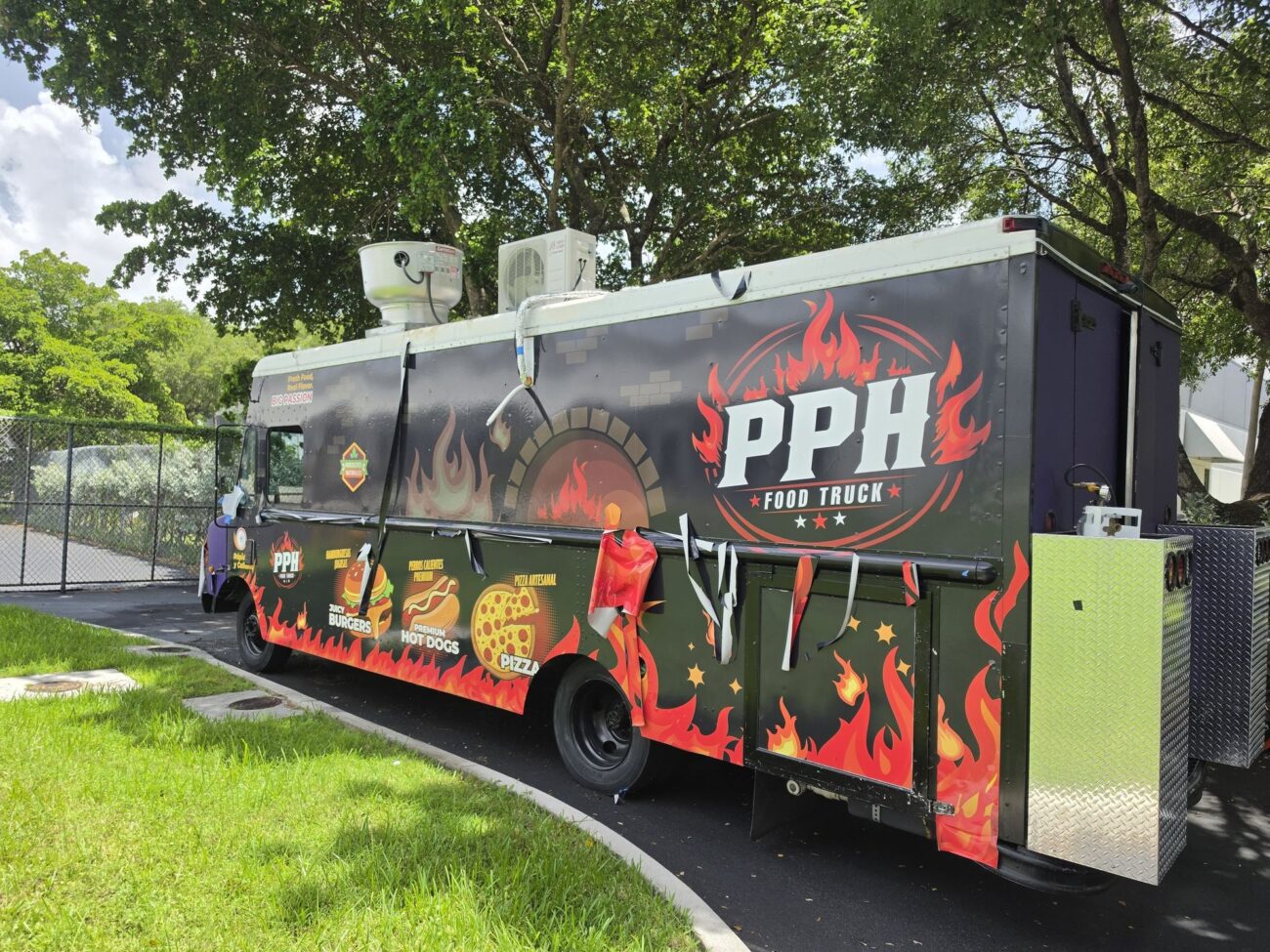
Step 3: Make the menu readable
Most customers see a food truck from two distances: from the street, where they read the name and the type of food, and up close in line, where they read the menu. Put the logo big on the side, and keep the menu panels at eye level near the window with short, bold names. In Miami, bilingual panels are a practical choice because they speak to more of the people walking up.
What affects the cost of a food truck wrap
We quote each truck individually. The main factors are the size of the truck, how much of it is covered, the vinyl and laminate used, how complex the design is, and how many fixtures the graphics have to work around. We would rather see the truck than give a number over the phone.
For more on materials and design, see our food truck wrap guide for Miami. If your truck is in North Miami Beach, see our North Miami Beach food truck wrap page. For fleets, see commercial vehicle wraps.
To plan your truck wrap, request a quote or call (305) 468-9463. We are at 8850 NW 13th Terrace, Unit 103, Doral, FL 33172.
FAQ
What should a food truck wrap include?
Your name or logo, what you sell, and a way to find you, such as a social handle or phone number. Keep the main message large and the details short.
Can a food truck be wrapped around the service window and roof equipment?
Yes. Graphics are trimmed around the window, vents and fixtures so they keep working, and the design is planned around them.
Should a food truck wrap be bilingual in Miami?
It is a good option if your customers speak both languages. PPH uses English and Spanish menu names on the truck.
How much does a food truck wrap cost in Miami?
It depends on the size of the truck, the coverage, the vinyl and the design. We give a quote after seeing the truck.
Do you wrap food trucks in Doral and Miami-Dade?
Yes. Graphink is based in Doral and serves Miami-Dade businesses.